Introduction
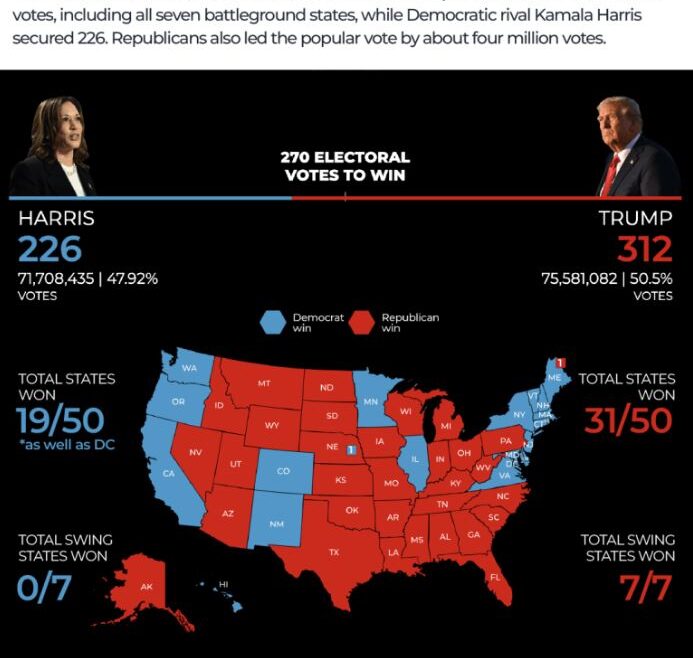
The USA elected a new president, Donald Trump.
This victory obviously came with mixed reactions in every camp; the Democrats are disappointed, the religious sect is joyous, while others are tense. Russia seems fine with it, while Ukrainians are anxious.
The crux for me as a Nigerian is, WHAT IS IN IT FOR US, NIGERIANS?
From the pre-election campaigns, Trump has based his stance on “America First,” and having won all 7 of the swing states, it’s deductive that most Americans were desirous of a change; they wanted Democrats out.
What is in it for Nigerians...
Politics and Geopolitics
The US is a superpower, but Nigeria is a major force in Africa. President Trump might force his way in his America First drive.
Nigeria and the USA are partners in counterterrorism and security, which could mean an increase in intelligence and military support. Nigeria has relied on international aid in intelligence, training, and weapons to fight insurgent groups, especially Boko Haram, so support from partners like the US would go a long way.
The way France is being pushed away by her former Francophone colonies, the USA might not want that experience, so aligning with Africa’s biggest population and 2nd largest GDP per capita, it would be to their advantage to come to the table.
Economy and Trade Policies
This is a very important part. In the first half of 2024, Nigeria recorded a trade surplus with the U.S., with imports at N1.9 trillion and exports at N3.1 trillion. Trump’s “Buy American” policy may affect imports and may increase tariffs, and Nigeria seriously needs all the income flow it can get.
If Trump’s tariff policies discourage U.S. imports from Nigeria, this could negatively affect Nigeria’s export earnings, particularly for sectors like oil, minerals, and agricultural products. The African Growth and Opportunity Act (AGOA), which was introduced by Republican President George W. Bush to allow African exports into the U.S. duty-free, is set to expire in 2025, and there are skepticisms about the Trump administration renewing it.
If you are making a house and a nail breaks, do you stop building, or do you change the nail?
— Wise Words
Immigration and the Diaspora Impact
In recent years, remittances from the Nigerian diaspora have contributed over $20 billion annually to Nigeria’s economy, helping to offset FX shortages. Trump has been really heavy regarding U.S. immigration policy, Green Cards by birth, etc.; uneven travel restrictions on the Nigerian Diaspora and immigration policies might affect the Nigerian “Jappa” dream.
The truth is we might face stricter immigration opportunities.
If Trump reinstates such policies, it could dampen the ability of Nigerians to pursue educational and work opportunities in the U.S.
This restriction would not only impact Nigerian nationals but could also reduce remittance flows, which are a major source of foreign exchange for Nigeria.
A decrease in remittance inflows would reduce domestic consumption and place additional pressure on Nigeria’s foreign reserves, which are already under strain.
Global Actors and Influencers
Trump has always been stubborn, and as a billionaire, we outwardly see a dogged player that can challenge any status quo, especially those set by bodies like the IMF and World Bank. Trump has always had that disposition of bulldozing his way in his direction; we might see a lot of resistance from global actors, influencers, and policy drivers.
Capital Flows into Nigeria
Historically, Trump has favoured a low-interest-rate environment, pushing the Federal Reserve to maintain a loose monetary policy even during periods of economic growth. Trump’s renewed pressure for lower interest rates could again influence the Federal Reserve’s policy direction.
From 2016 to 2020, Nigeria attracted approximately $58.1 billion in capital importation, with 2019 seeing the highest inflows at $23 billion. This was in part due to Nigeria offering high-yielding instruments like government bonds, which attracted foreign investors—including $4.69 billion from U.S. sources in that year.
Nigeria could once again attract U.S.-based capital looking for higher returns, particularly if Nigeria maintains attractive interest rates on its debt instruments. This capital inflow could help alleviate Nigeria’s foreign exchange pressures and support naira stability.
The Nigerian Government Games
The Nigerian government has body language that doesn’t want to upset the US, especially with a man at the helm, like President Trump. I feel the Nigerian government officials will reduce their brazen show of questionably gotten wealth, lavish lifestyles, and opulent displays. They might become more conscious and even avoid the USA as a travel destination.