
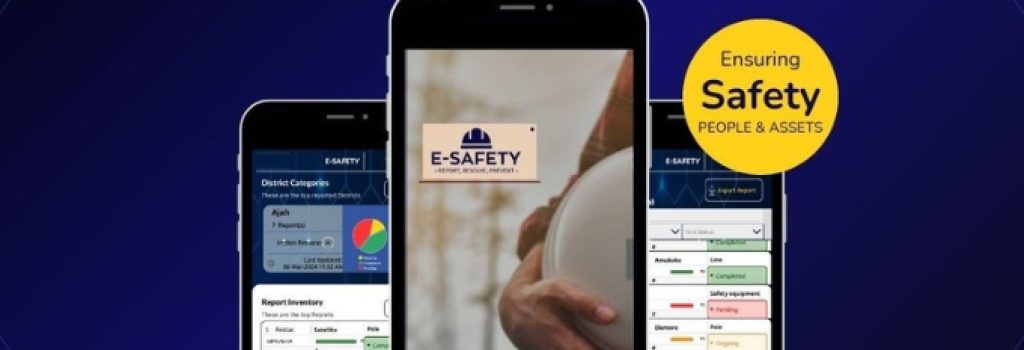
Project Overview
Build an in-house mobile and web application designed and developed to centralize workplace safety reporting, incident tracking, and compliance management for our organization. What began as a response to slow, paper-based safety processes grew into a platform used daily by employees across multiple departments and locations.
Role: Lead Developer & Product Designer
Timeline: 6 months (concept to company-wide rollout)
Platforms: iOS, Android, and web dashboard
Tech Stack: Power Apps, Figma, Flutter
The Problem
Before e-Safety, incident reporting relied on paper forms routed through supervisors and safety officers. Reports took days to reach the right people, data was scattered across spreadsheets, and follow-up actions were rarely tracked to completion. Employees found the process cumbersome, so minor hazards often went unreported — exactly the kind of small issues that can escalate into serious incidents.
Leadership needed three things: faster reporting, centralized visibility, and a verifiable audit trail for compliance.
Technology becomes powerful when it solves problems that matter
Techlancers Middle East Tweet
Discovery and Planning
I started by interviewing safety officers, floor supervisors, and frontline staff to understand their daily workflows. Key findings shaped the product:
- Employees wanted to report hazards in under two minutes, ideally from their phones.
- Safety officers needed automatic routing based on incident type and severity.
- Management wanted dashboards showing trends, open actions, and resolution times.
- Compliance required immutable records with timestamps and user attribution.
I translated these into a lean MVP: incident reporting, photo attachment, severity classification, automatic notifications, and a basic tracking dashboard.
Design and Development
The mobile app was built on the Microsoft Apps platform, with design integrated from Figma. It works across iOS and Android platforms. The reporting flow uses a guided, step-by-step form with large touch targets and minimal typing—critical for users in industrial environments wearing gloves or working in poor lighting. Users select an incident category, set severity, add a description, and attach photos. GPS and timestamps are captured automatically.
Role-based access control ensures employees, supervisors, and safety officers see only what’s relevant to them. When a report is submitted, push alerts are sent to the appropriate safety officer, and the system creates a trackable action item with a due date.
The web dashboard, gives safety managers a real-time view of all incidents, open actions, and trend analytics. I included exportable reports for audits and a heatmap showing incident hotspots by location.
Challenges and Solutions
Adoption resistance: Some employees were skeptical of yet another app. I addressed this by keeping the reporting flow under two minutes, adding a QR-code shortcut at key locations, and running hands-on training sessions.
Offline usage: Many areas had spotty connectivity. I implemented offline queueing so reports sync automatically once a connection is restored.
Data integrity: For compliance, I ensured reports and status changes are append-only, with full audit logs that cannot be edited retroactively.
Results
Within three months of rollout:
- Incident reporting time dropped from an average of 2 days to under 5 minutes.
- Reported hazards increased 65%, reflecting better capture of near-misses rather than more accidents.
- Average resolution time for safety actions fell by 40%.
- The platform passed an internal compliance audit with zero documentation gaps.
What I Learned
This mobile app solution taught me that internal tools succeed or fail on user experience. A safety app competes with busy schedules and old habits, so every second of friction matters. It also reinforced the value of designing with—not just for—the people who will use the product daily. Beyond the technical build, the project strengthened my skills in stakeholder management, iterative delivery, and building systems where reliability and trust are non-negotiable.